DETAILED TENDER PACK — GRAND SLAM OFFER PACK™
See what is included, what is missing and what could affect delivery—before you appoint.
One clear tender pack covering scope, price basis, programme, assumptions, clarifications, risks, opportunities and delivery controls.

A price alone does not tell you what you are buying.
A single price can hide missing scope, untested assumptions, unrealistic programme expectations and unresolved interfaces. The Grand Slam Offer Pack™ is designed to make those issues visible before they become delivery problems.
01
Reduce uncertainty
Bring missing information, assumptions, exclusions, interfaces and delivery risks into view before the order is placed.
02
Support the decision
Give Project Managers and Quantity Surveyors a clearer basis for comparing scope, fit, approach, programme and commercial position.
03
Prepare the partnership
Create a focused agenda for the Free Project Certainty Review™ and a controlled route into mobilisation and delivery.

What you receive in plain language.
The pack is tailored to the information available and the decision you need to make. Typical contents include:
- Tender response and scope position.
- Client price summary and detailed quotation.
- Assumptions, exclusions and information gaps.
- Commercial clarifications and responsibility boundaries.
- Resource-led programme and sequencing considerations.
- Key risks, opportunities and project interfaces.
- Quality, inspection and handover controls.
- Proposed route to mobilisation and delivery.
Project-specific by design: the pack contents, level of detail and tender commitments are matched to the enquiry, available information and the scope Haggar has agreed to price and deliver.
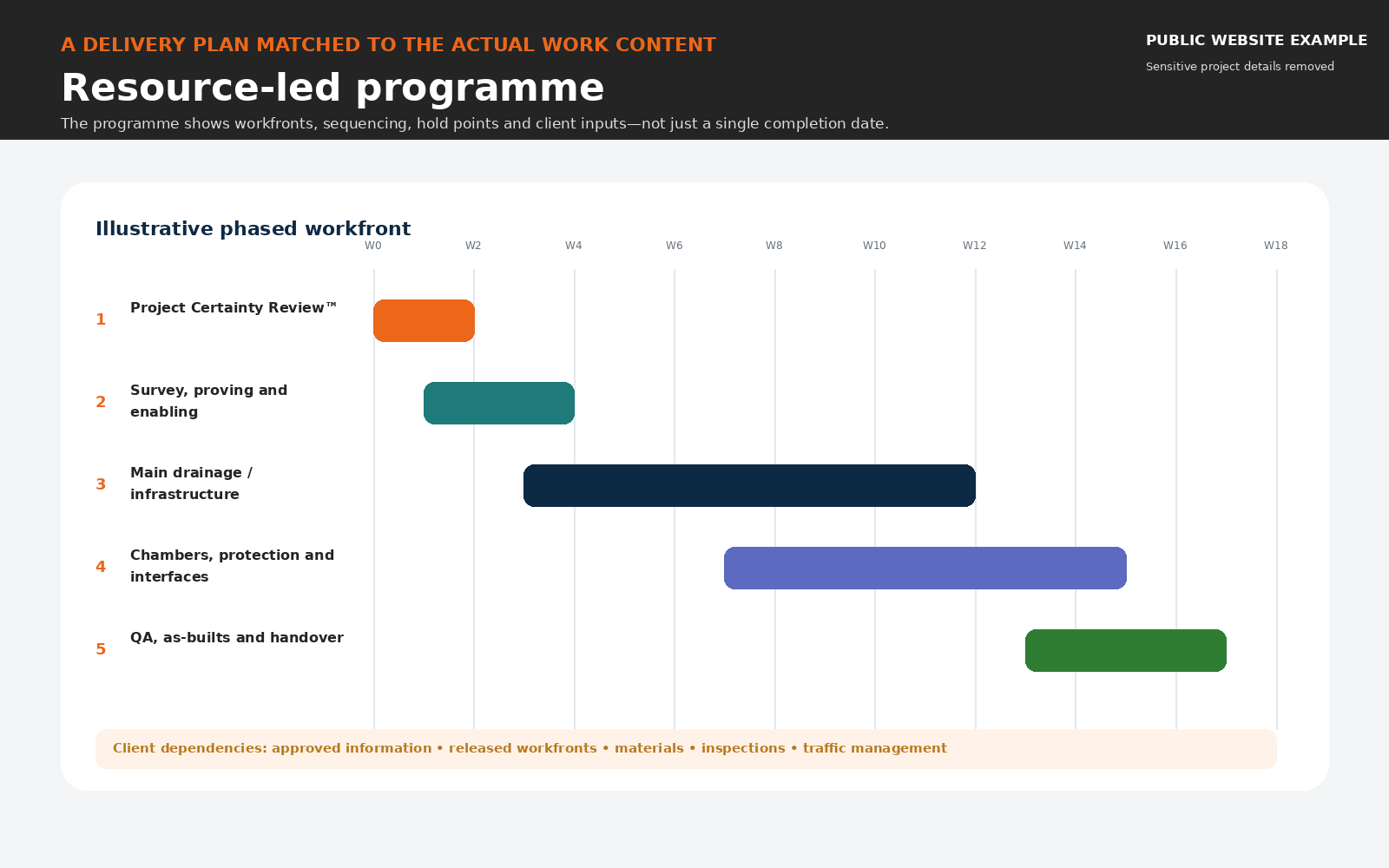
A programme matched to the actual work content.
The delivery plan should consider workfronts, resources, interfaces, design releases, client inputs, inspections and the wider project—not simply show one completion date.
01
Understand the workfront
Identify access, phasing, temporary works, approvals and the information needed before each activity can start.
02
Match resources to scope
Connect labour, plant, specialist inputs and material requirements to the sequence rather than relying on unsupported durations.
03
Make dependencies visible
Show the decisions, releases and client inputs that could affect the critical path or productivity.


Identify the risk. Find the opportunity.
RISK CONTROL
Protect the package
Record the event, cause, consequence, current exposure, proposed mitigation, owner and the commercial position that remains.
VALUE & OPPORTUNITY
Improve the outcome
Make practical programme, constructability, quality and value opportunities visible without weakening safety, scope or contractual control.

Make the invisible work visible before it is covered.
Quality, inspection and handover controls help define what must be checked, what evidence is required and who accepts it before the work progresses.
Hold points
Define the stages that require inspection, approval or evidence before work is concealed or the next activity begins.
Progressive evidence
Build photographs, test records, surveys, material information and change evidence as the work progresses.
Controlled handover
Keep as-builts, testing, snags and close-out information visible so handover is not left until the final days.
Built for the next decision.
The pack helps you walk into the next client, commercial or board conversation prepared, informed and confident about what is known, what remains open and what must happen next.
Three steps from tender information to an informed decision.
1
Send the tender information
Provide the package information and identify the main programme, commercial or delivery pressure.
2
Receive the detailed tender pack
Review the project-specific tender response, its commercial basis and the issues that still require a decision.
3
Review the risks and next decisions
Work through the package together, close the critical decisions and confirm the partnership for delivery.
See the whole package before you appoint.
Send the tender information and identify the programme, cost or delivery pressure you need to resolve.